Rytkönen Claire
English language professional, Head of English at Galimatias
On Tuesday, November 3 the United States will hold its elections. These will elect not only the president but also members of the Senate, the House of Representatives, thousands of state officials across the country and decide hundreds of local referendums.
The American electoral system differs from Finnish system in almost every single aspect and can be confusing.
Lue lisää
Aiheet:
us election,
2020 United States presidential election,
trump vs biden,
new president,
your vote counts,
every vote counts
With the pandemic having such a strong influence on people’s lives all over the world, it can feel important to mention this in emails with international partners. You may feel that you wish to show your concern and good wishes towards your clients or colleagues when writing in English. How can you do this in a caring but also business like way?
Lue lisää
Aiheet:
English,
keep safe,
take care,
Yours from afar,
see you soon,
showing care,
pandemic,
keep in touch,
keep well
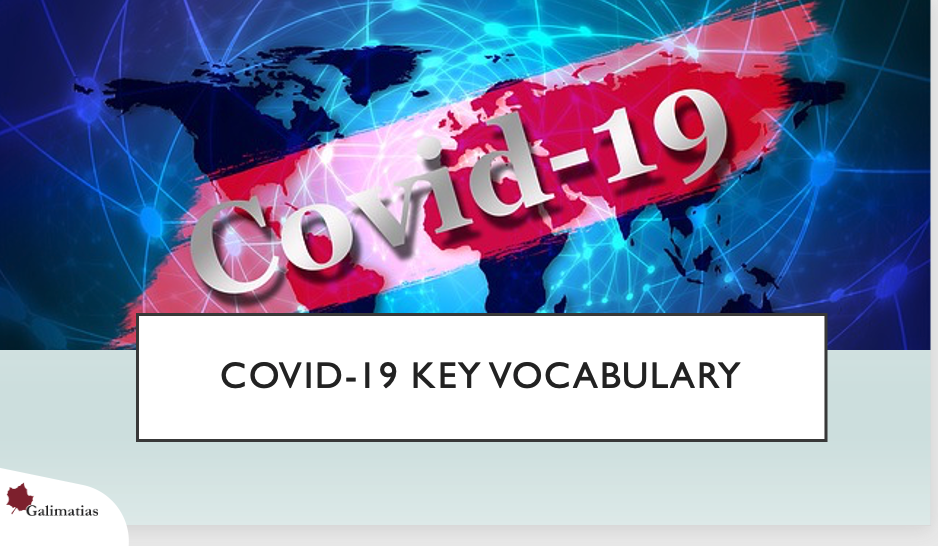
The coronavirus pandemic has brought not only serious disruption and change to countries across the world but also a new range of terminology to help describe the disease and its effects.The epidemic will not be under control until there is at least a working vaccine. In this blog you have the chance to revise your English vocabulary related to this current matter.
Lue lisää
Aiheet:
English,
English language,
covid-19,
korona,
pandemic vocabulary
Although videoconferencing has shown steady growth over recent years the COVID-19 pandemic has vastly expanded its use. Daily users of Microsoft Teams have grown from 10 million at the end of 2019 to over 100 million in June 2020. Skype has also shown a notable upswing while Zoom has shown the strongest growth of all - from less than 10 million daily users to over 200 million daily users in the same period. At Galimatias we have already been using videoconferencing in language training for several years with very good learning results and client feedback. Here below we would like to share some useful hints for overcoming possible challenges in videoconferences in general and in English in particular.
Lue lisää
Aiheet:
English,
videokokous englanniksi,
videoconference,
videoconferencing in English,
video conferencing key phrases,
usefull tips for videoconferences,
vinkit videokokoukseen englanniksi
The 17th of March marks St Patrick’s Day, traditionally the day of the death of St Patrick (c. AD 385–461), the patron saint of Ireland. However, this day celebrates far more than an ancient saint. The day has evolved into a celebration of Ireland and its culture. Furthermore, Ireland has developed an ever increasingly important role in the English-speaking world, in the EU, and in international business.
Lue lisää
Aiheet:
perinne,
tradition,
English-speaking world,
EU,
St Patrick´s Day,
irish,
brexit,
international business,
European Union,
Ireland
The 14th of February (celebrated as ystävänpäivä in Finland) is known as Valentine’s Day in English speaking countries and is also marked in many other countries around the world.
Lue lisää
Aiheet:
kielitaito,
English,
valentine´s day,
ystävänpäivä,
14.2.
- Guidelines for good use of time expressions
Did you know that to “move something back” in English means to move it ahead, further away? How do you know for sure when your meeting will take place? Have a look at our blog and short animation and learn the secrets of time expressions in English in order to be on time.
Lue lisää
Aiheet:
englannin kieli,
English,
time expressions,
ajan määreet,
grammar,
move back time,
rules of thumb,
kielioppi,
bring forward time
English idioms, just like English spelling, can be confusing. While idioms are great for giving your language more expressiveness and helping it flow more naturally, English idioms can often be illogical. By using a range of these idioms you can ensure your English is both more naturalistic and expressive. So, some care needs to be taken!
Lue lisää
Aiheet:
English,
englanti,
English idioms,
sujuva viestintä,
idioms,
englannin sanonnat,
meetings in English,
englanninkieliset kokoukset
Just before the holidays we would like to take a last chance to boost your English. Perhaps you will also use English over the summer, travelling for pleasure or business, or in between the breaks at a summer cottage?
Lue lisää
Aiheet:
rallienglanti,
English,
englanti,
kesäkurssi
Finnish writing style can be very direct with expressions such as: ”Do please remember to...”;”Do it properly” or ”On time”. But what if you send a business email in English to someone who doesn’t understand Finnish style? Is there a risk that you are unintentionally being rude - impolite in English, even if you add a please?
Lue lisää
Aiheet:
koulutus,
kielikoulutus,
kansainvälisyys,
viestintä,
englannin kieli,
liiketoiminta,
englanti