
Increased remote working and the use of social media for socialising mean that real human conversation in English is becoming rarer. Many people leave education with strong English skills in our country, but due to a lack of use in busy working life, these skills gradually fade. With regular, enjoyable, and structured practice, these skills can be quickly revived. This is the area that students tell me they value most in English training, and where consistent lessons build both confidence and ability.
Rising skills, especially pronunciation
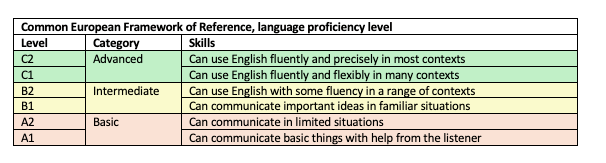
The first encouraging observation is the significant improvement in English skills over this period. Twenty years ago, courses in basic levels in English were common among working professionals. Today most courses start at an intermediate level and even above. In the past, it was rare to meet a Finn with a C2 level (advanced speaker) of English in Finland. In the first 10 years of my career, I could count the C2 speakers on my fingers, and they were almost always lawyers, who had lived and worked abroad. Today, advanced English speakers are becoming common across many sectors.
The Finnish education system supports this trend. Proficiency levels in English are rising, and students who achieve a good grade in long course English at upper secondary school often already reach B2 level at the age of 18 or 19, whereas in the past this was B1.
Another important development is the increasing fluency and naturalness of pronunciation. I have never understood the negative attitude to “Rally English”. The Finnish accent is very understandable compared to other accents, such as French or Spanish, when speaking English. However, “Rally English” itself among working professionals is slowly disappearing. The pronunciation exercises that were necessary at the beginning of my career—for phonemes such as j, g, sh, ch, b, and p—are no longer needed. Nowadays, we focus on more advanced pronunciation exercises such as stress patterns, word emphasis, and understanding a variety of accents in English. This remarkable improvement in pronunciation may be due to wider access to English media and younger generations growing up with constant exposure to spoken English.
Changes in business communication
For students, specialist vocabulary and terminology for their own sector remain important, as does general social English. The need for specialised telephone English was the first to decrease, as most professionals now rarely receive phone calls in English. Today, most communication is handled in writing.
Email English has also decreased in importance, partly due to AI. AI tools can now check and produce correct English texts, and some students even say that email phrases are unnecessary because they will “just use AI in real life”. However, one important aspect of email communication that remains essential is proper email etiquette, as misunderstandings can still easily occur.
On the other hand, the need for English skills related to video conferencing is rising sharply. English for participating in or chairing meetings online, giving presentations, and managing systems and websites, has increased significantly. The move to online lessons has actually increased attendance, as learning is more accessible in terms of time and location.
Increasing needs for interaction in English
Although the English language is more present than ever online, students report fewer opportunities for live interaction in English. As a result, many clients are focusing more on developing oral communication skills, as they have fewer chances to use English in real situations.
Business travel has decreased significantly, with more meetings, conferences, and seminars online. While this is convenient, it means fewer opportunities to speak and socialise in English. This need still exists and might increase in the future, when we realise that human interaction is still crucial to create and maintain professional relationships internationally.
Looking to strengthen your team's language skills? If your company has any language training needs, get in touch with us—we'd be happy to create a solution tailored to your goals.